
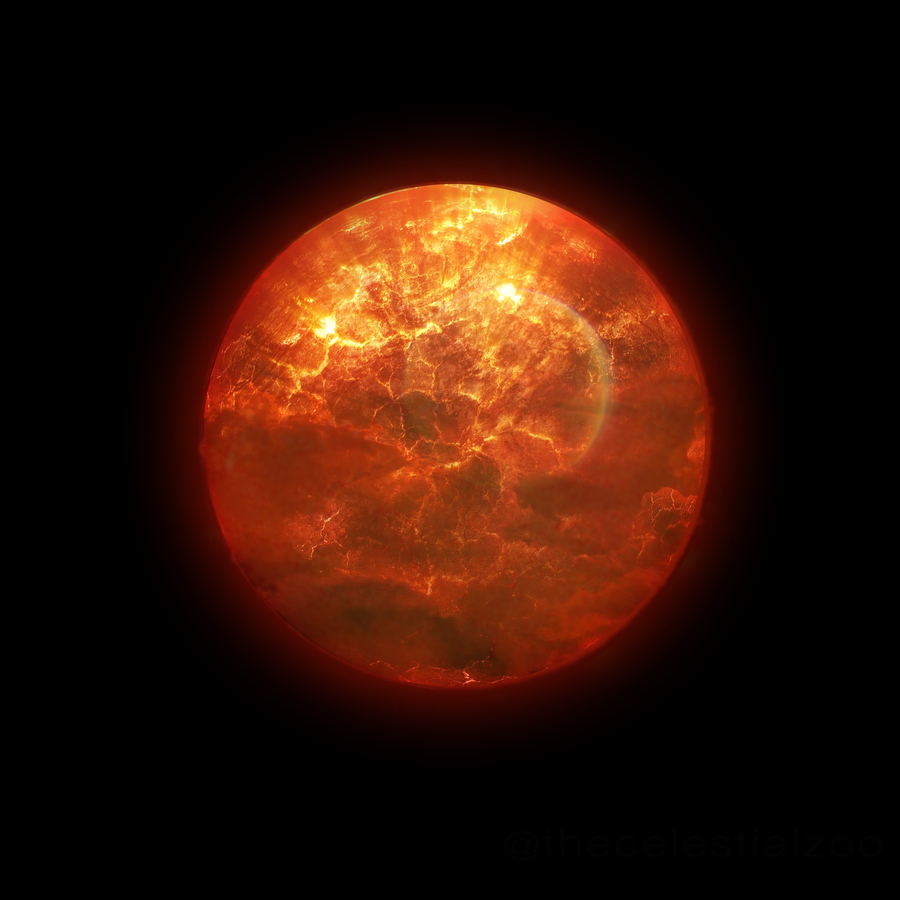
UY Scuti
In the vast expanse of our universe, stars come in all shapes and sizes, from the petite dwarfs to the mighty giants that defy imagination. Among these, one star stands out as a true titan: UY Scuti. Let's embark on a journey to unravel the mysteries of this colossal cosmic entity.
UY Scuti, Meet a Supergiant
Ever ponder the universe's vastness? Gazing at the night sky offers a glimpse, but can our minds truly grasp its true expanse? Take the Sun –1.3 million Earths to fill it, says NASA. And yet, it's just one (small) star among countless in the cosmos. NASA estimates around 100 billion stars in the Milky Way alone, highlighting the cosmic scale beyond our comprehension.
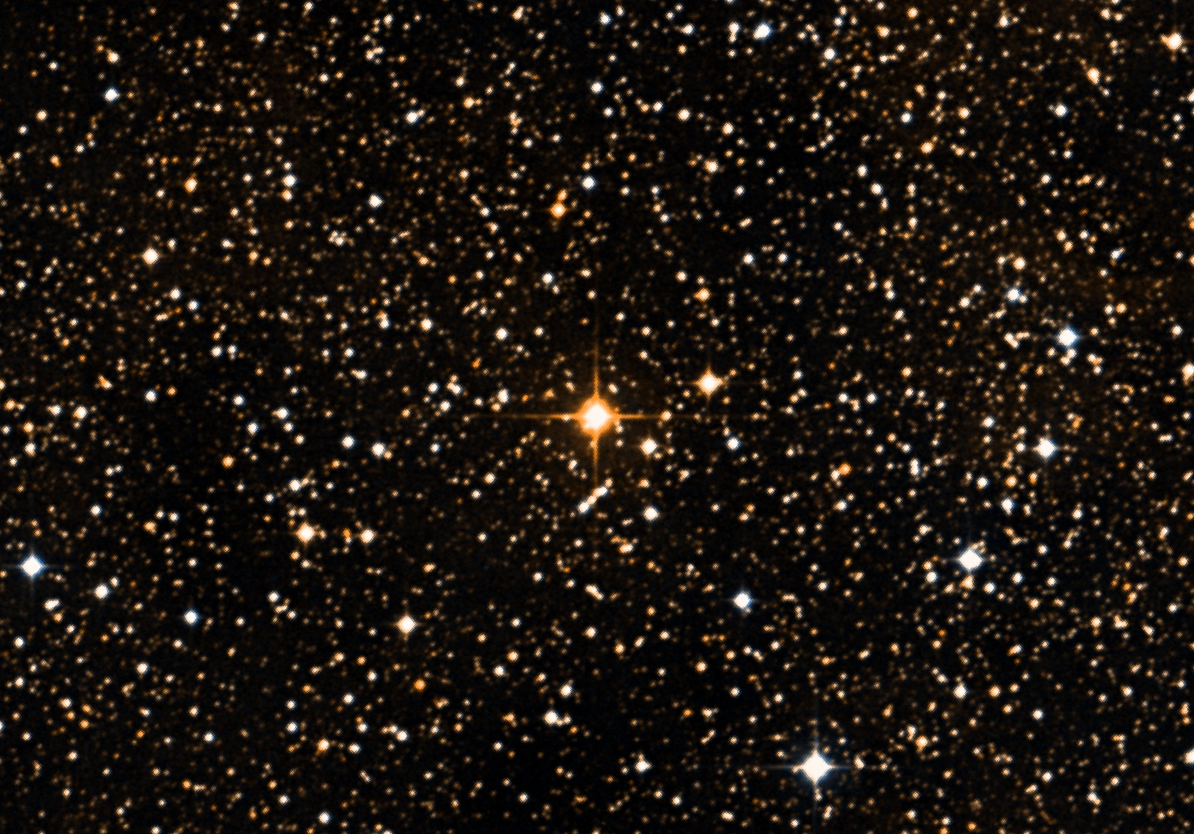
Now, amidst this cosmic symphony, emerges UY Scuti, a red hypergiant that dwarfs our own Sun in a truly humbling manner, defying the limits of our imagination. Located some 9,500 light years away, in the small but rich constellation Scutum, this gigantic star was first catalogued in 1860, by astronomers at the Bonn Observatory, in Germany.
UY Scuti challenges our understanding of stellar physics
Despite its luminosity, its magnitude fluctuates due to its distance and position in the Zone of Avoidance, an area of the sky obscured by the Milky Way's dense star field. Some surveys show that UY Scuti pulses with a period of 740 days, revealing its status as a semiregular variable star. However, the exact variability period is still under study.
It's its size, however, that astonishes!
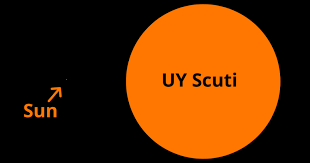
Nearly five billion times the volume of the Sun, UY Scuti stands as a cosmic titan, challenging our understanding of stellar physics. Latest observations revealed it has a radius around 1,700 times larger than that of our star, making it the second-largest star by radius, behind Stephenson 2-18 (2,150 solar radii).
As we marvel at UY Scuti's grandeur, we contemplate its future. Stars typically spend 90% of their life on main sequence, converting hydrogen into helium in their core. According to current stellar evolution models, According to current stellar evolution models, UY Scuti has likely already completed its main sequence phase and begun fusing helium in its core, marking the beginning of its final phase.
Once it runs out of helium, it will start fusing heavy elements. This will disrupt the balance the star needs to sustain itself against gravity, causing a gravitational collapse. At this point, UY Scuti may end into a spectacular, powerful supernova, perhaps even birthing a black hole or neutron star.
While the exact details of its fate are still uncertain, it's yet another reminder of the transient nature of stars and the ever-changing landscape of the cosmos.