
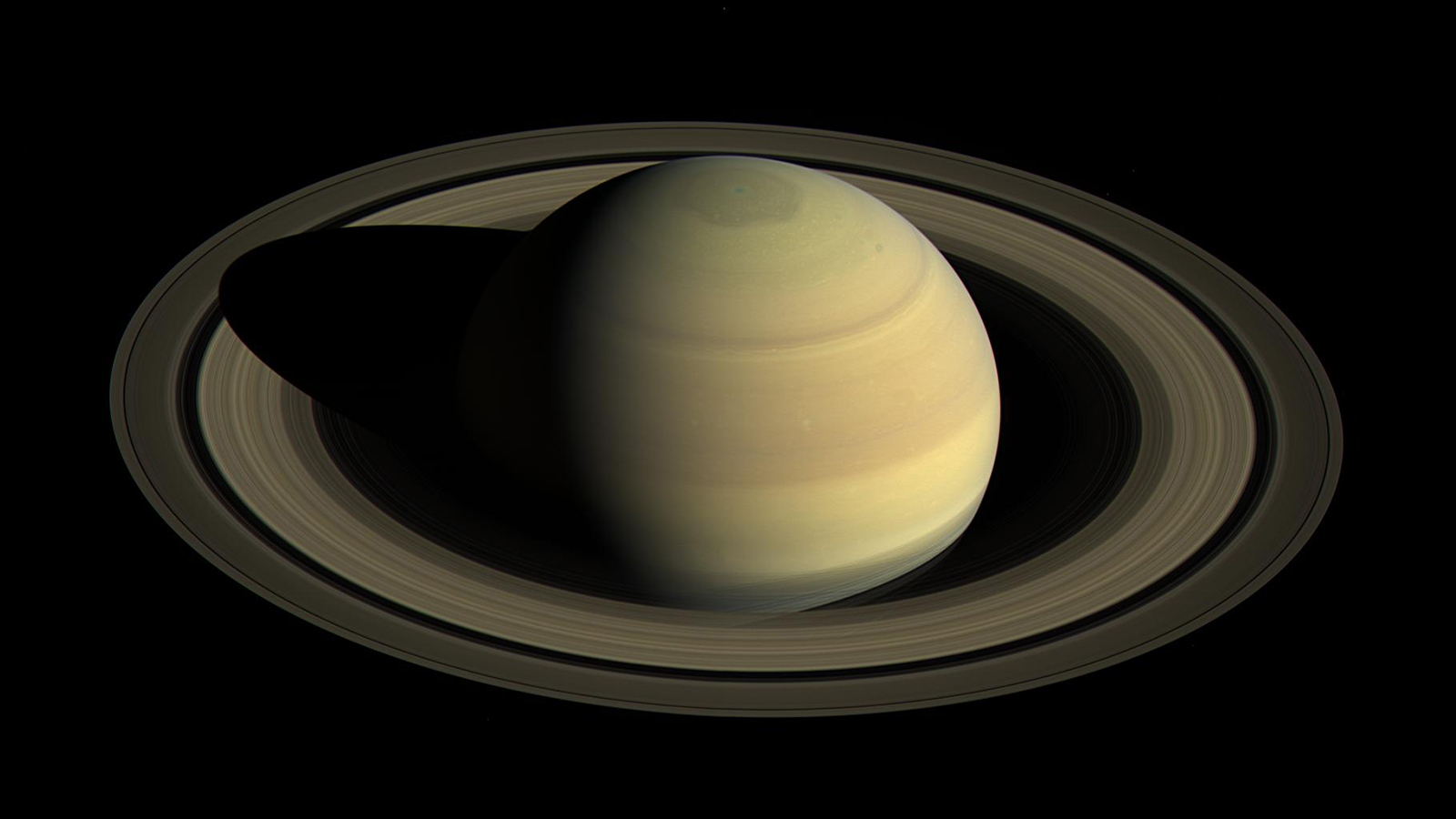
Saturn
Saturn's stunning rings make it the jewel of the solar system, while this gas giant also boasts more than 80 moons, including Titan, a moon with its own atmosphere.
The Lord of the rings: Saturn
Renowned for its mesmerizing hues and captivating ring system, Saturn stands as a celestial marvel, often hailed as the most stunning planet in the solar system. Its distinctive features have the power to transform a casual observer into an astronomy enthusiast with just a glimpse through a telescope.
While Galileo's first telescopic observation of Saturn in 1610 marked a milestone, the planet has been an object of fascination since ancient times. The Romans, in their reverence, named it after their god of agriculture, a legacy reflected in the name of the day "Saturday," derived from "Saturni dies" or "Saturn's Day," dating back to the 2nd century.
Saturn's colossal presence dwarfs that of Earth, with over 95 times its mass and an average radius approximately nine times larger, making it the second largest planet after Jupiter. Situated at a distance of 1.4 billion km from the Sun, it holds the sixth position in the solar system and dazzles with its steady yellow glow, visible even to the naked eye.
However, Saturn's true allure lies beyond its visible facade, embodied in its iconic ring system comprising seven distinct bands interspersed with gaps, prominently featuring the Cassini division. Composed primarily of ice particles, rocky debris, and dust, these rings are remnants of comets, asteroids, and moons fragmented by Saturn's gravitational force.
Contrary to its striking appearance, Saturn's composition mirrors that of a gas giant akin to Jupiter, predominantly consisting of hydrogen and helium. Its upper atmosphere, adorned with ammonia crystals, imparts a distinctive pale-yellow hue amidst hues of brown and grey.
Behold Saturn, jewel of the solar system, adorned with rings of cosmic wonder
Saturn's rapid rotation bestows upon it the distinction of possessing the second shortest day in the solar system, completing a rotation in just under 11 hours. Its orbital journey around the Sun, spanning about 29.4 Earth years, mirrors Earth's tilt, resulting in seasonal variations.
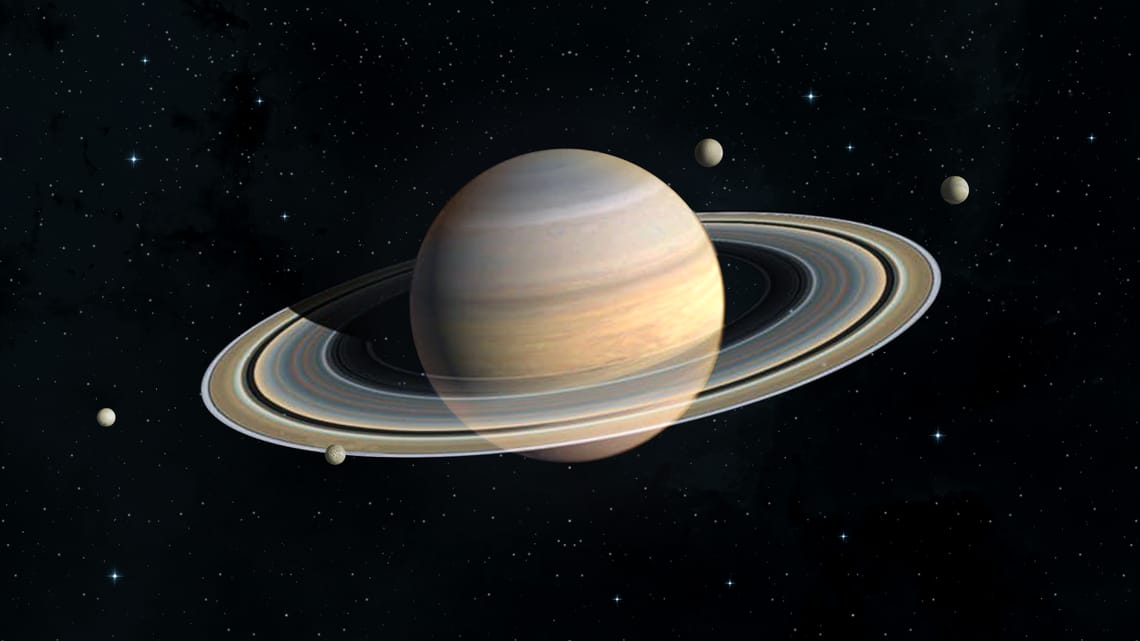
One of Saturn's most captivating aspects is its extensive retinue of moons, numbering 146 as of the time of this article. Among them, Titan shines as the jewel, ranking as the second largest moon in the solar system, surpassing even the planet Mercury in size.
Beyond its sheer magnitude, Titan's allure lies in its unique characteristics, boasting a dense atmosphere and surface features reminiscent of Earth, including rivers, lakes, and seas. While predominantly composed of hydrocarbons like methane and ethane, liquid water akin to Earth's resides beneath Titan's icy crust, rendering it a promising candidate in the quest for extraterrestrial life within the solar system.