
Quasars
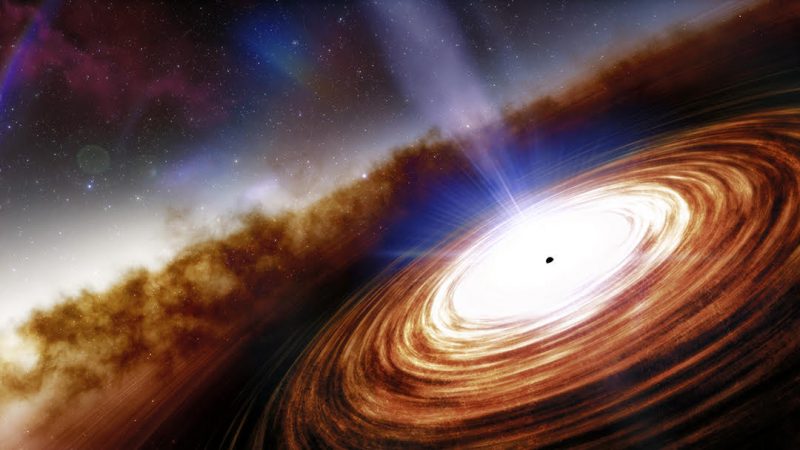
Quasars, among the most distant and luminous objects in the universe, are celestial bodies so bright they outshine the galaxies that host them. Since their discovery more than half a century ago, quasars have fascinated astronomers and played a crucial role in our understanding of the early universe.
Meet the Quasars, The Lighthouses of The Universe
The history of quasars dates back to the 1950s with the advent of radio astronomy. Early radio surveys of the sky revealed unusual objects emitting enormous amounts of radiation across several frequencies. These objects, traced back to point-like sources resembling distant stars, defied known explanations. The first photographs, however, showed that these sources were not stars but were embedded in faint, fuzzy halos. This led astronomers to label them as "quasi-stellar radio sources," or quasars, highlighting their mysterious nature.
In 1963, Maarten Schmidt identified the first quasar, 3C 273, in the constellation Virgo. His work revealed that these objects were not stars within our galaxy but incredibly distant and powerful sources of energy, billions of light-years away. Another early discovery, 3C 48, also contributed to the understanding of these enigmatic objects.
Quasars are a type of active galactic nucleus (AGN), compact regions at the core of galaxies with much higher than normal luminosity. They are powered by supermassive black holes with masses ranging from millions to billions of times that of our Sun. When gas falls toward the black hole’s event horizon, it heats up due to friction and extreme gravity, emitting vast amounts of energy in the form of electromagnetic radiation. This process makes quasars among the brightest and most energetic objects in the universe.
Quasars are found in very distant galaxies with abundant gas supplies, particularly in those that are strongly interacting or merging. They were far more common in the distant past, around 10 billion years ago, during a period when the universe was more active and gas-rich. Today, quasars are less frequent, as younger galaxies like our Milky Way lack the necessary gas reserves to fuel such extreme activity. This decline in activity reflects the evolving nature of the universe and the changing conditions within galaxies over time.
They are incredibly bright, often outshining the galaxies that host them. Located billions of light-years away, they offer a glimpse into the early universe, illuminating its distant past. A single quasar can emit more energy than thousands of galaxies combined, making them some of the most powerful objects known. They emit radiation across the entire electromagnetic spectrum, from radio waves to X-rays, showcasing their extraordinary energy output.
Some of the largest and most powerful quasars ever discovered include TON 618, with a black hole mass of around 66 billion solar masses, and SDSS J0100+2802, harbouring a black hole with a mass of about 12 billion solar masses. Other notable quasars like HS 1946+7658 and ULAS J1342+0928 provide insights into the universe's infancy, as their light has travelled over 13 billion years to reach us.
Quasars' brilliance lights up the cosmos
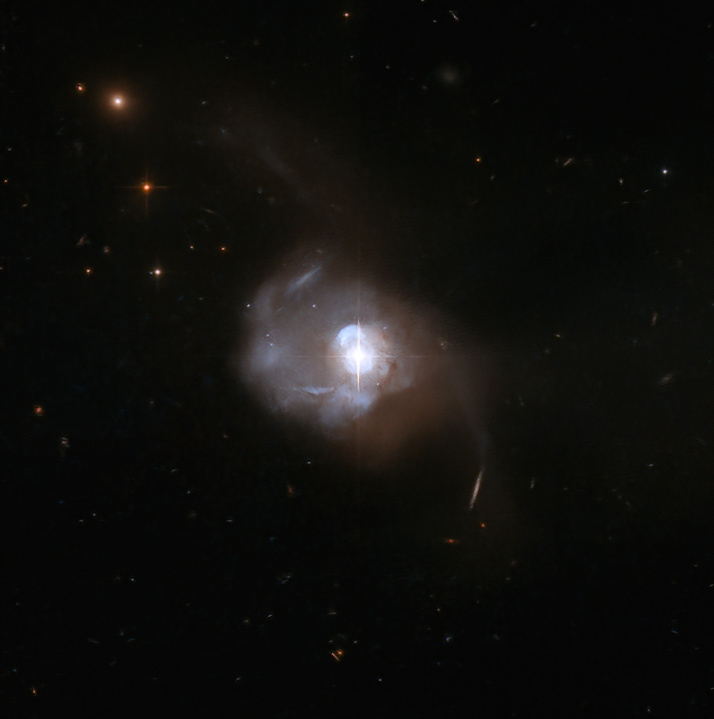
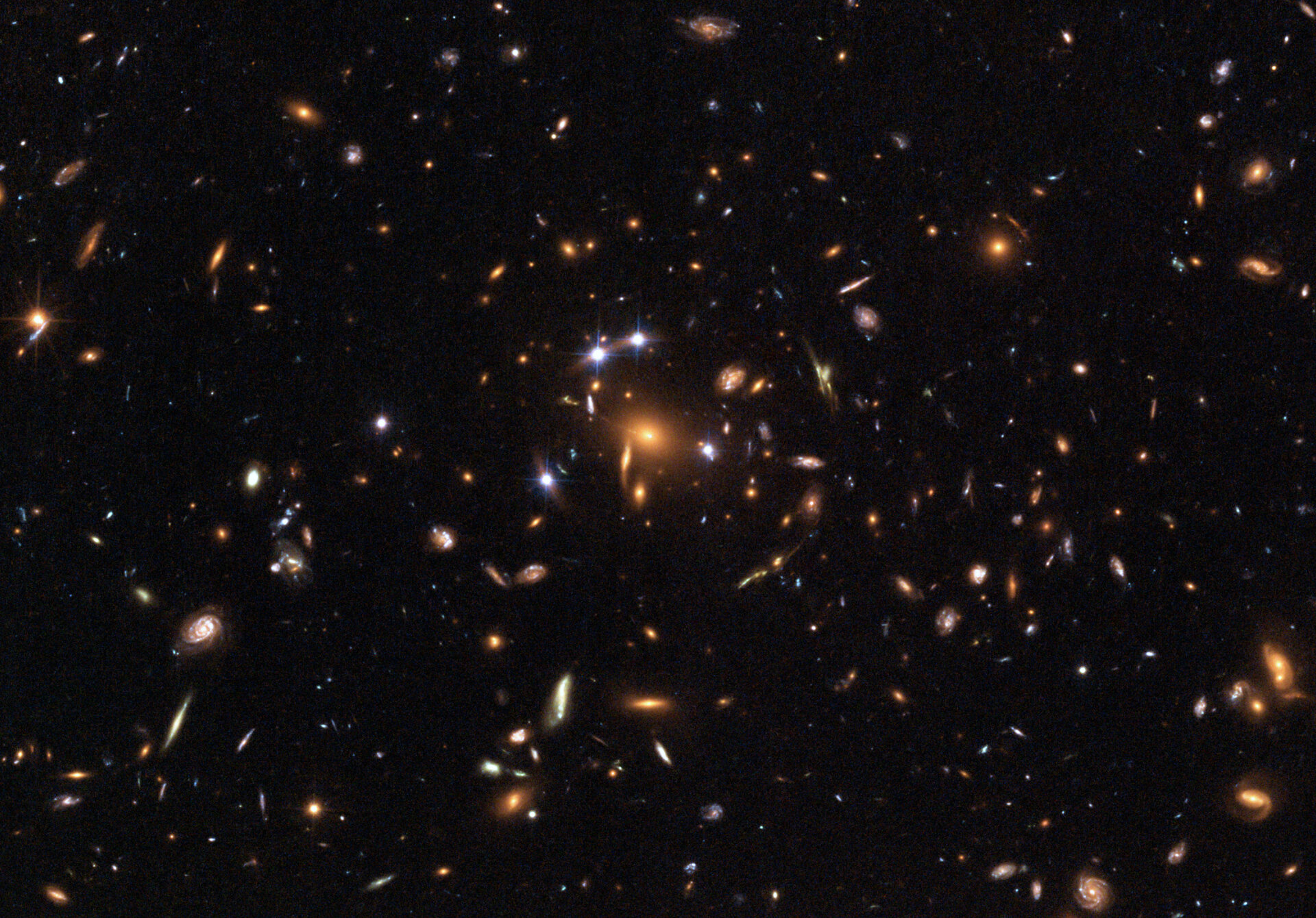
The closest quasar to Earth is Markarian 231, located approximately 600 million light-years away in Ursa Major. Among quasars, 3C 273 in Virgo stands out as the brightest, with an apparent magnitude of 12.9, making it visible with small telescopes. In 1979, the gravitational lens effect predicted by Einstein’s theory of relativity was confirmed with images of the double quasar 0957+561. Additionally, a study published in February 2021 found more quasars in one direction (towards Hydra) than the opposite, suggesting a possible directional movement of our galaxy.
Quasars are not just cosmic curiosities; they are vital tools in understanding the early universe and the monstrous black holes that lie at the hearts of galaxies. Their brilliance lights up the cosmos, reminding us of the unimaginable forces at play in the vast reaches of space. Their discovery and study continue to push the boundaries of our knowledge, igniting our curiosity about the universe we inhabit.