
The Mysteries of Outer Space
Venture into the cold frontiers of our solar system and discover icy relics from its earliest days.
Unveil the Secrets of Outer Space: Ancient Icy Relics Await!
The inner Solar System is a spectacular show of planets and moons dancing around the Sun on the notes played by gravity. Yet, beyond the radiant glow of the Sun lies a realm shrouded in mystery—the outer solar system—a cold expanse inhabited by countless drifting icy bodies, asteroids, and comets, among them the enigmatic Pluto.
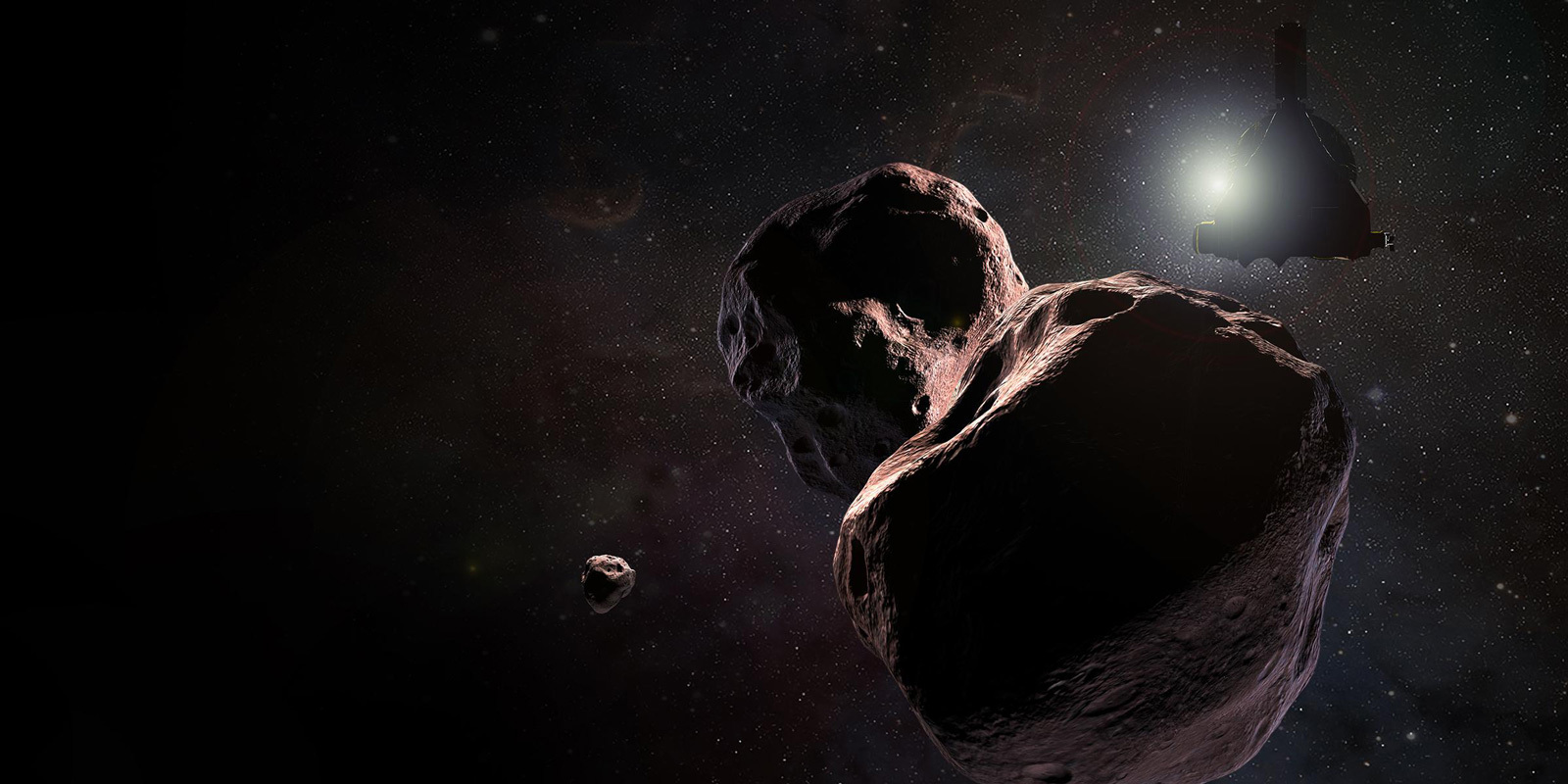
Beginning just beyond Neptune's orbit, approximately 30 Astronomical Units (AUs) from the Sun (where 1 AU equals the average Earth-Sun distance), the outer solar system unveils a realm of profound coldness, with temperatures plunging near the abyss of absolute zero, freezing even the lightest elements like hydrogen.
Beyond Neptune the frozen remnants of our solar system's ancient past are waiting to be discovered.
This distant frontier contains two primary domains: the Kuiper Belt and the Oort Cloud. Spanning distances ranging from 50,000 to 200,000 AUs, as per certain estimates, these regions mark the realm where the Sun's gravitational grip weakens, and the vastness of interplanetary space begins.
The Kuiper Belt
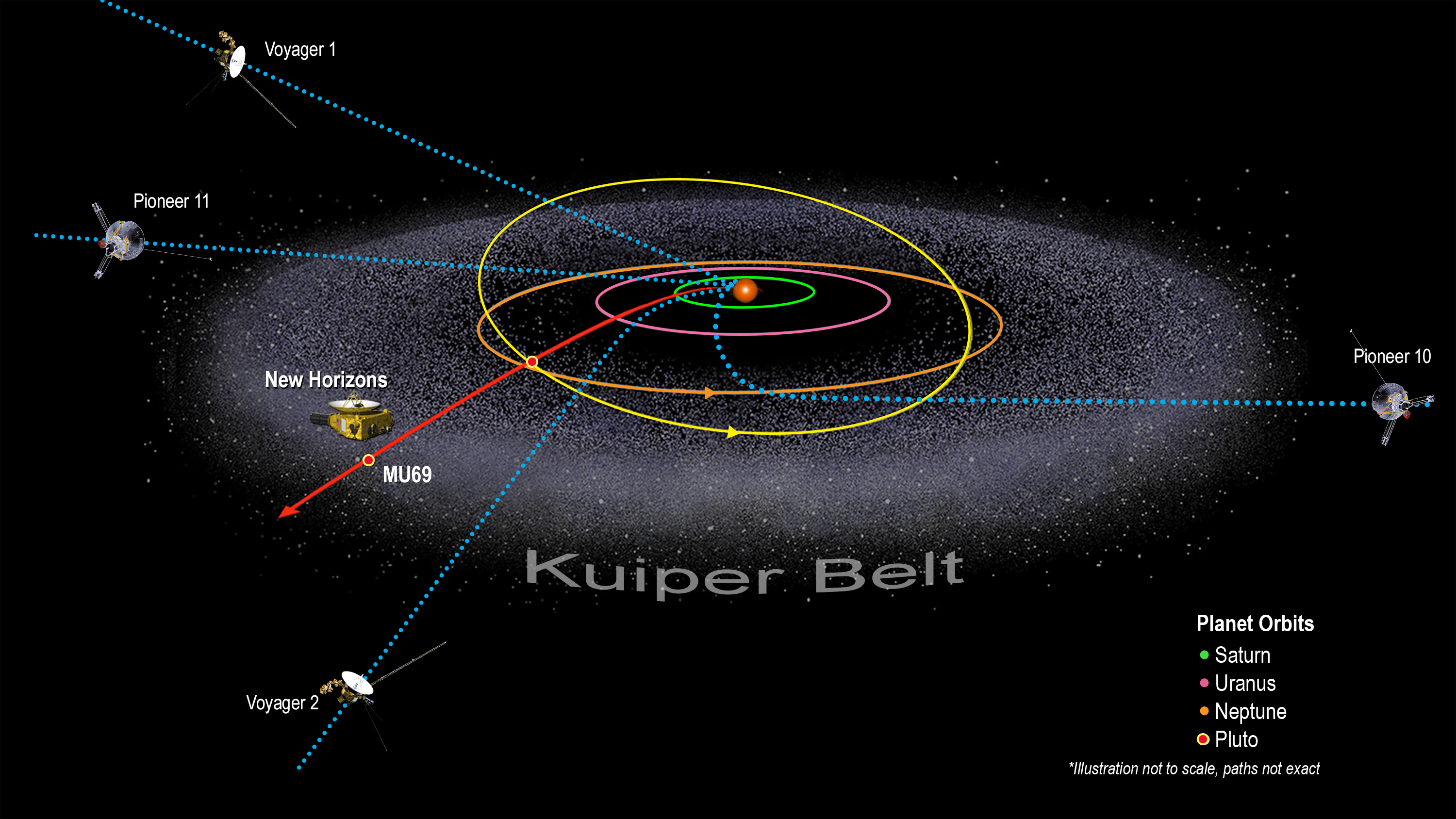
The Kuiper Belt, often dubbed the "third zone," forms a torus-shaped expanse housing myriad minuscule icy entities believed to be remnants of our solar system's primordial genesis. Collisions among these trans-Neptunian objects (TNOs) create smaller fragments, including comets and cosmic dust.
Comets, wondering bodies of frozen gases, rocks, and dust, embark on celestial journeys around the Sun, leaving behind luminous trails as they gradually melt. The Kuiper Belt boasts an abundant population of short-period comets, numbering in the trillions, completing orbits around the Sun in less than 200 years.
Among the Kuiper Belt's residents stands Pluto, once crowned as the ninth planet before its reclassification as a "dwarf planet" by the International Astronomical Union in 2006, owing to its failure to clear its orbital vicinity.
Known as "The King of the Kuiper Belt," Pluto exhibits distinctive characteristics: a counterclockwise rotation akin to Uranus, its own nitrogen-methane-dominated atmosphere, and surface temperatures ranging from -235°C to -210°C. Accompanying Pluto are its retinue of moons—Charon, Hydra, Nix, Kerberos, and Styx—and fellow dwarf planets like Eris, Haumea, and Makemake.
Beyond Neptune, the Kuiper Belt and Oort Cloud hold the frozen remnants of our solar system's ancient past, waiting to be discovered.
Oort Cloud
Far beyond the Kuiper Belt lies the Oort Cloud, a vast reservoir of icy bodies encircling the entire solar system, delineating its outer reaches. Here, the Sun's gravitational influence wanes, yielding to the subtle gravitational tugs of neighbouring stars.
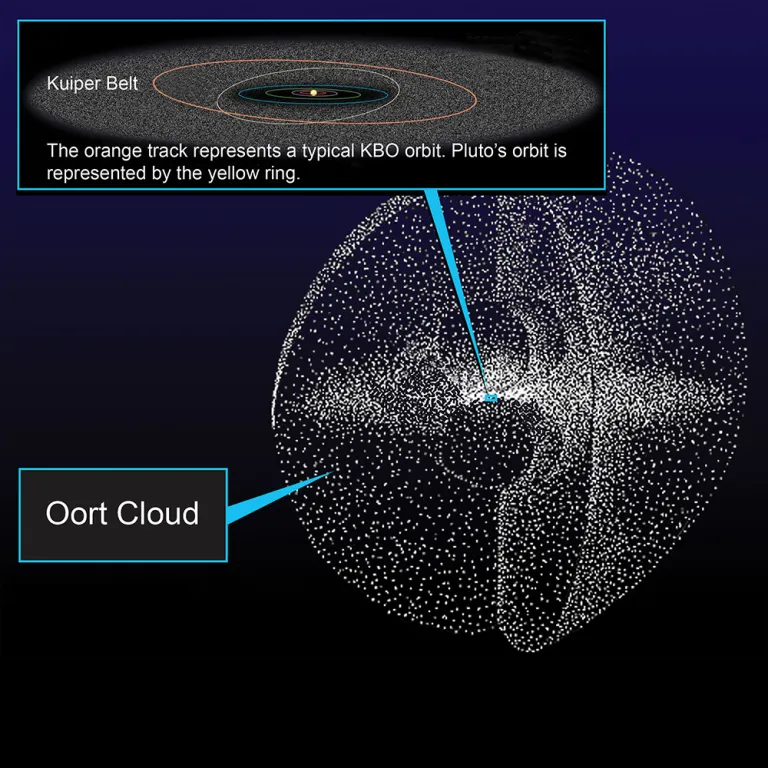
The Oort Cloud serves as the wellspring for a multitude of long-period comets, their orbits spanning from thousands to millions of years. Despite its vastness, only a handful of objects believed to hail from this distant realm have been identified.
Among them, Sedna, a dwarf planet roughly three-fourths the size of Pluto, orbits the Sun at a staggering distance of about 900 AUs, completing a circuit once every 10,500 years. Noteworthy for its reddish hue, Sedna ranks as the second-reddest object in our solar system, surpassed only by Mars.