
Black Holes
Hidden in the vastness of space, black holes are both menacing voids and cosmic marvels. These celestial wonders have fascinated scientists and dreamers alike, weaving a tapestry of mystery and awe.
Black Holes: the Dark Side of Gravity
When Galileo Galilei first aimed his homemade telescope at the night sky in 1610, little did he know he was about to revolutionize the field of astronomy forever. His jaw-dropping discovery of Jupiter’s moons turned the humble telescope into the best cosmic detective tool.
Since Galileo's time, we've raised our stargazing game, a lot. We've built larger and more sophisticated telescopes, some of which are conveniently placed in space. With these high-tech instruments, we've painted a detailed map of the universe. And let me tell you, it’s a real head-spinner!
Just picture it: galaxies strutting their stuff, nebulas flaunting their colours, and stars throwing planetary parties like it’s no big deal. And don’t forget about the celestial oddballs like pulsars, neutron stars, comets, and asteroids—all swirling around like characters in an endless movie, possibly produced by Universal Pictures!
But lurking among these cosmic celebrities is a swarm of elusive, dark characters: black holes. These silent, invisible, and totally mysterious objects are among the most feared in the universe. After all, science fiction often depicted them as evil monsters wandering in the universe, vacuuming everything they encounter.
But is that really what black holes are?
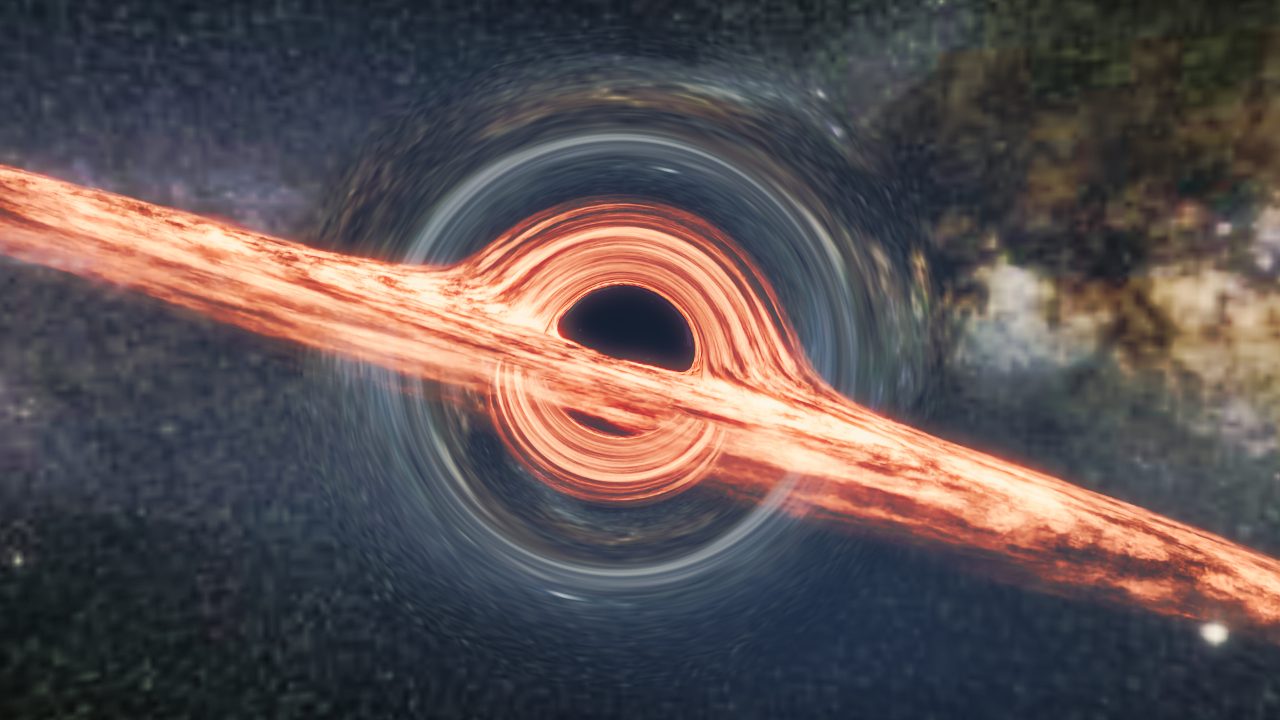
Well, reality is a bit different. Black holes are regions of space where a massive amount of matter is compressed into a very tiny area, whose gravitational pull is so strong that nothing, not even light, is fast enough to escape! Also, they don’t just roam the universe, randomly swallowing things; they've got manners, following precise orbits like proper space citizens.
The Mysteries of Black Holes Unveiled
Of course, if you get too close to a black hole, you're in big trouble. At the “event horizon,” the boundary of the black hole, gravity is so strong that in order to escape you would have to travel faster than the speed of light.
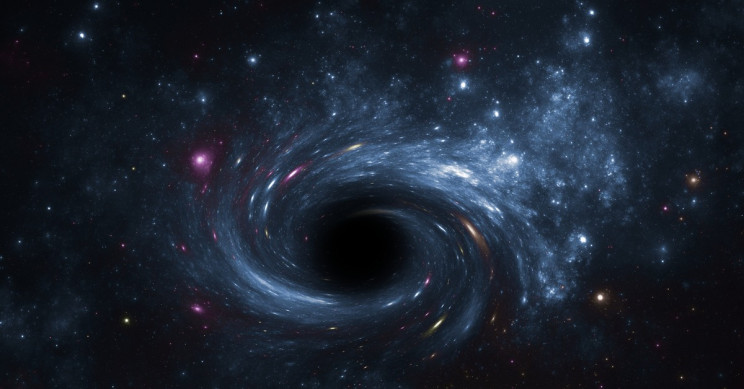
Despite their spooky reputation, black holes are pretty common. There could be billions lurking in our galaxy alone, including a supermassive one, called Sagittarius A*, chilling at the centre of the Milky Way like it owns the place.
Most black holes form from the remnant of large stars. The idea is that when a massive star consumes all its fuel and dies, all it leaves behind is a dense core. If this core has a certain mass (over three times the mass of the Sun), it collapses on itself under the effect of gravity to become a black hole.
But while the theory is elegant and widely accepted, capturing an actual image of a black hole remained fairly complicated for decades. Astronomers, however, are very clever people and eventually figured out a way: to spot a black hole, all they needed to do was observing its effects on nearby matter.
Imagine a black hole passing through a region of interstellar dust or crossing paths with a close star: the extreme gravitational pull would draw matter toward the event horizon and in doing so the matter would accelerate and heat up, emitting fancy x-rays that can be easily observed by astronomers.
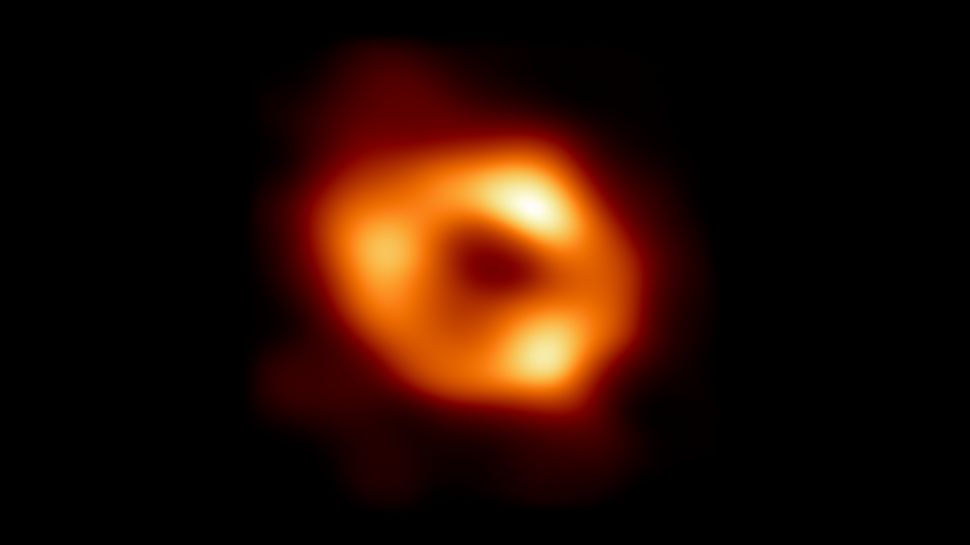
That is precisely what astronomers did in 2019 when the Event Horizon Telescope (EHT), a combination of eight ground-based radio telescopes, captured the image of the supermassive black hole at the centre of the galaxy M87 interacting with nearby matter. The first image ever recorded of a black hole was served, and it was stunning.
So far, scientists and astronomers have identified three types of black holes whereas a fourth type, primordial black holes, is still only theoretical, although scientific evidence of their existence is mounting. These are the main classes of black holes:
Primordial – While these black holes are still only theoretical, scientists believe they formed in the initial stages of the universe, a fraction of second after the Big Bang. At this stage, the universe was not homogeneous, and areas that were denser and hotter than others may have quickly collapsed into black holes.
According to some theories, primordial black holes may even explain one of the biggest mysteries of the universe: dark matter. Such theories suggest that primordial black holes may in fact be a type of dark matter called MACHOs (MAssive Compact Halo Objects), the glue that keep galaxies together. While this is a valid theory, there is yet no definitive evidence linking primordial black holes to dark matter.
Stellar mass (5 to 100 solar masses) – These are the “ordinary” black holes, which form when a star more than thirty times the mass of the Sun explodes into a supernova at the end of its cycle, leaving behind a dense core. This new core then collapses on itself under the effect of gravity and a stellar mass black hole is formed. They are relatively small but incredibly dense, with an impressive gravitational force.
Intermediate mass (100 to 10,000 solar masses) – As the name suggest, these black holes represent a midway between stellar mass and supermassive black holes. Scientists ignored their existence for decades until in March 2020 Hubble spotted what it is believed to be a 50,000 solar mass black hole. Intermediate black holes could form when stars in a cluster collide in a chain reaction or from the merger of two or more stellar mass black holes.
Supermassive (greater than 1 million solar masses) – These black holes are millions or even billions of times as massive as the Sun and are found at the core of major galaxies: they are the seeds around which the galaxies are constructed. For instance, Sagittarius A*, the supermassive black hole at the core of our galaxy, is roughly four million times the mass of the Sun whereas the black hole photographed in 2019 weighs a billion solar masses. Supermassive black holes are thought to be formed from the merger of hundreds or thousands of tiny black holes.
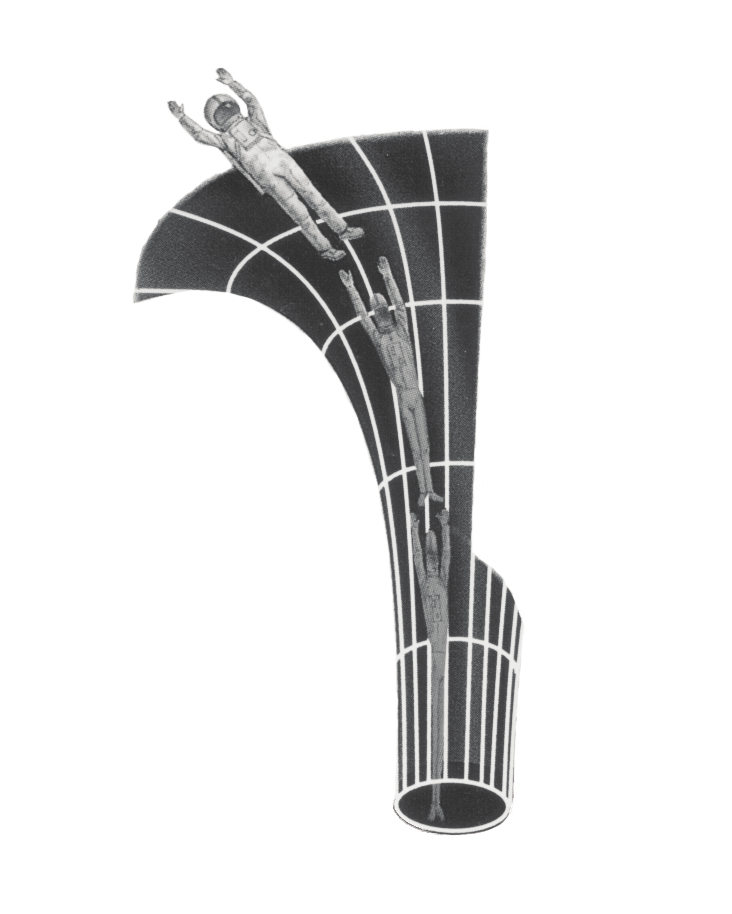
Luckily for us, the nearest black holes are thousands of light-years away from Earth, so they're not crashing any backyard barbecues. Just remember, never get too close to a black hole! You’ll get stretched head-to-toe into a long string of particles before even reaching the event horizon, a process known as “spaghettification.”