LDN 1583 & Ced 51
Observation Summary
—
—
05h 31m 54s / −05° 26′ 00″
Not applicable (dark/reflection nebula; very low surface brightness)
∼60′ × 40′
In a Nutshell
Dark & Reflection Nebula
LDN 1583, Cederblad 51
Northern
Orion
∼1,170 light-years (∼360 pc)
Technical Details
Paramount Software Bisque MX+
Takahashi E160ED f/3.3
ZWO ASI6200MM-Pro
LRGB: 120 × 180 s
Hα: 120 × 300 s
32 h 30 m
—
Deep Sky Chile
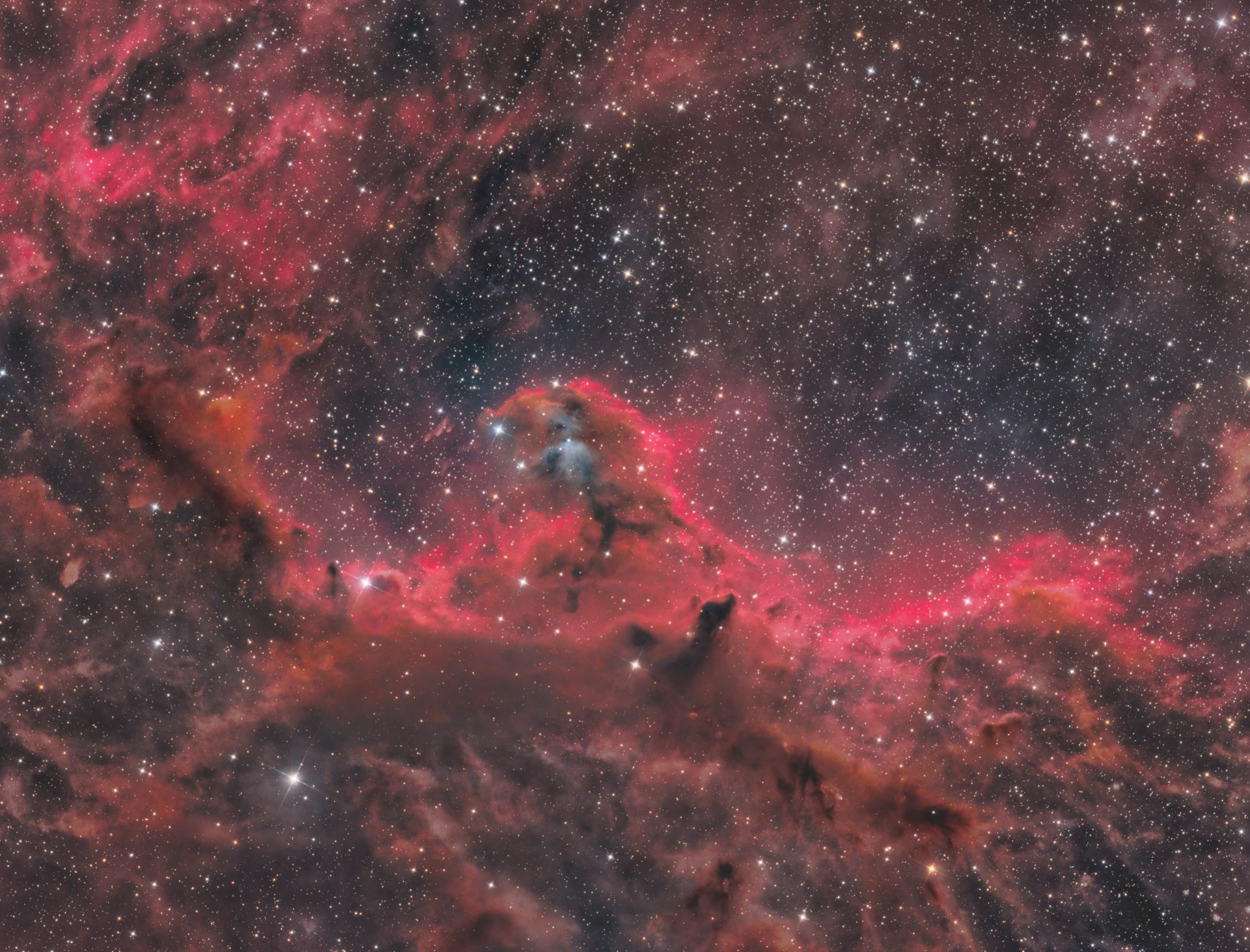
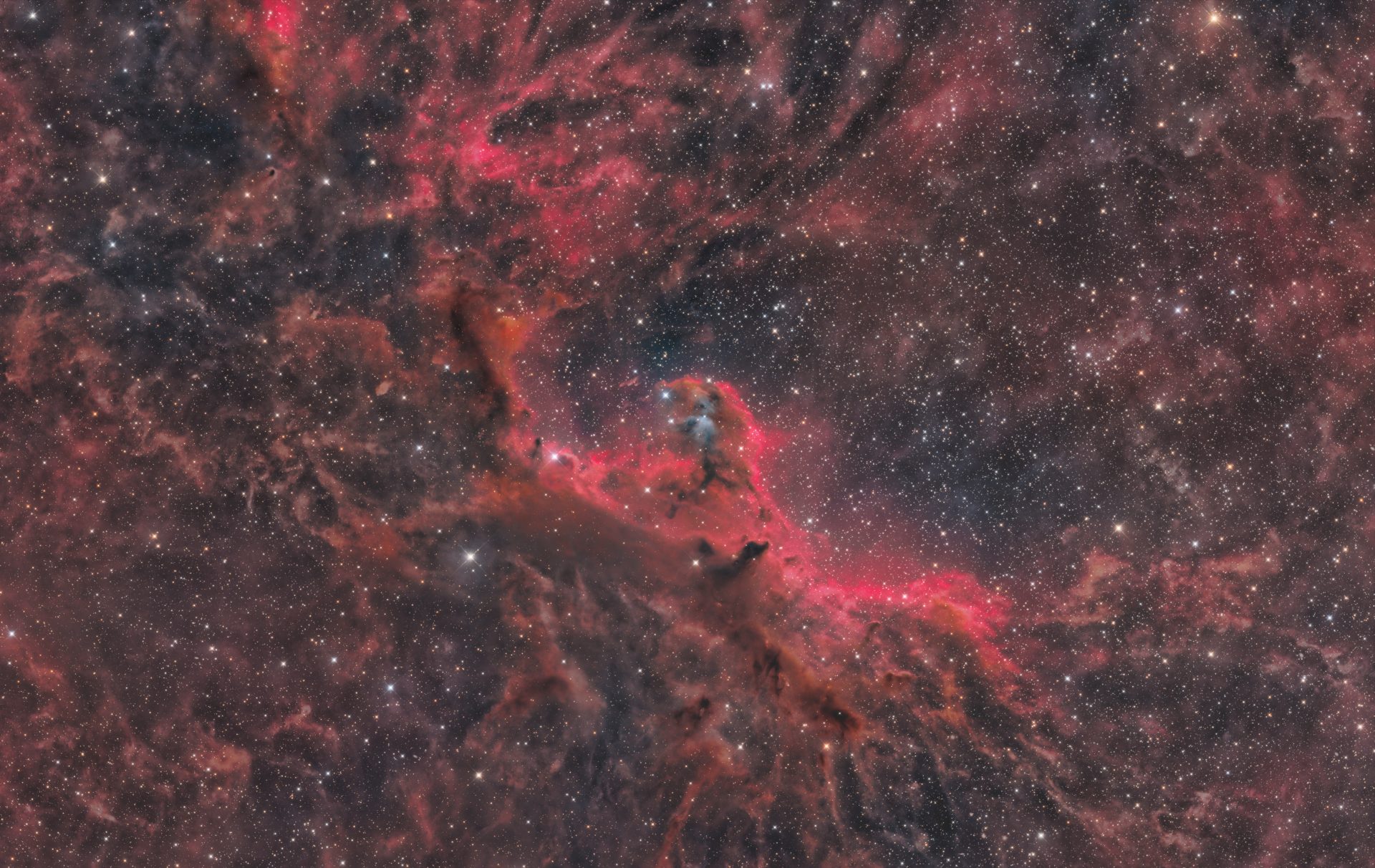
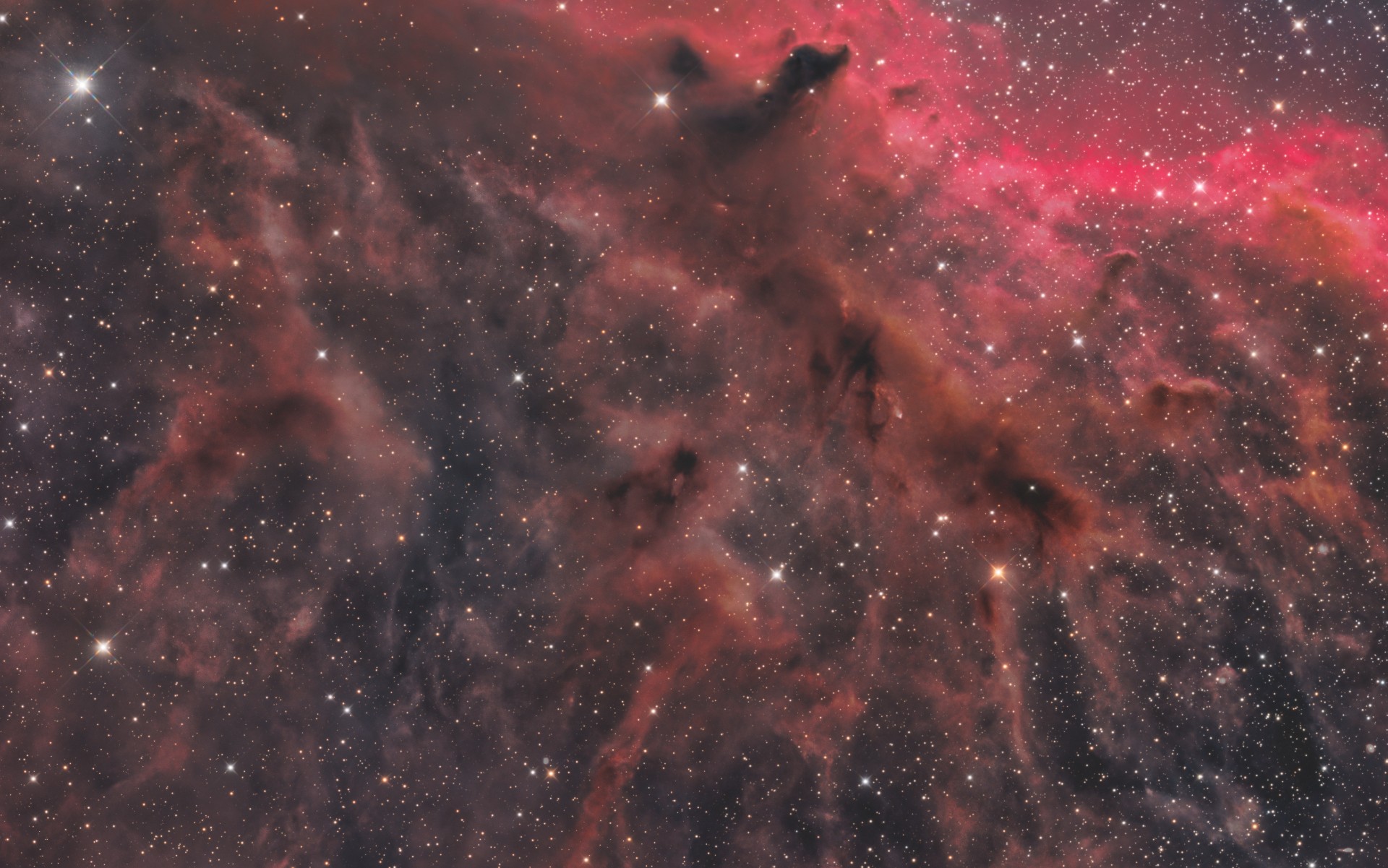
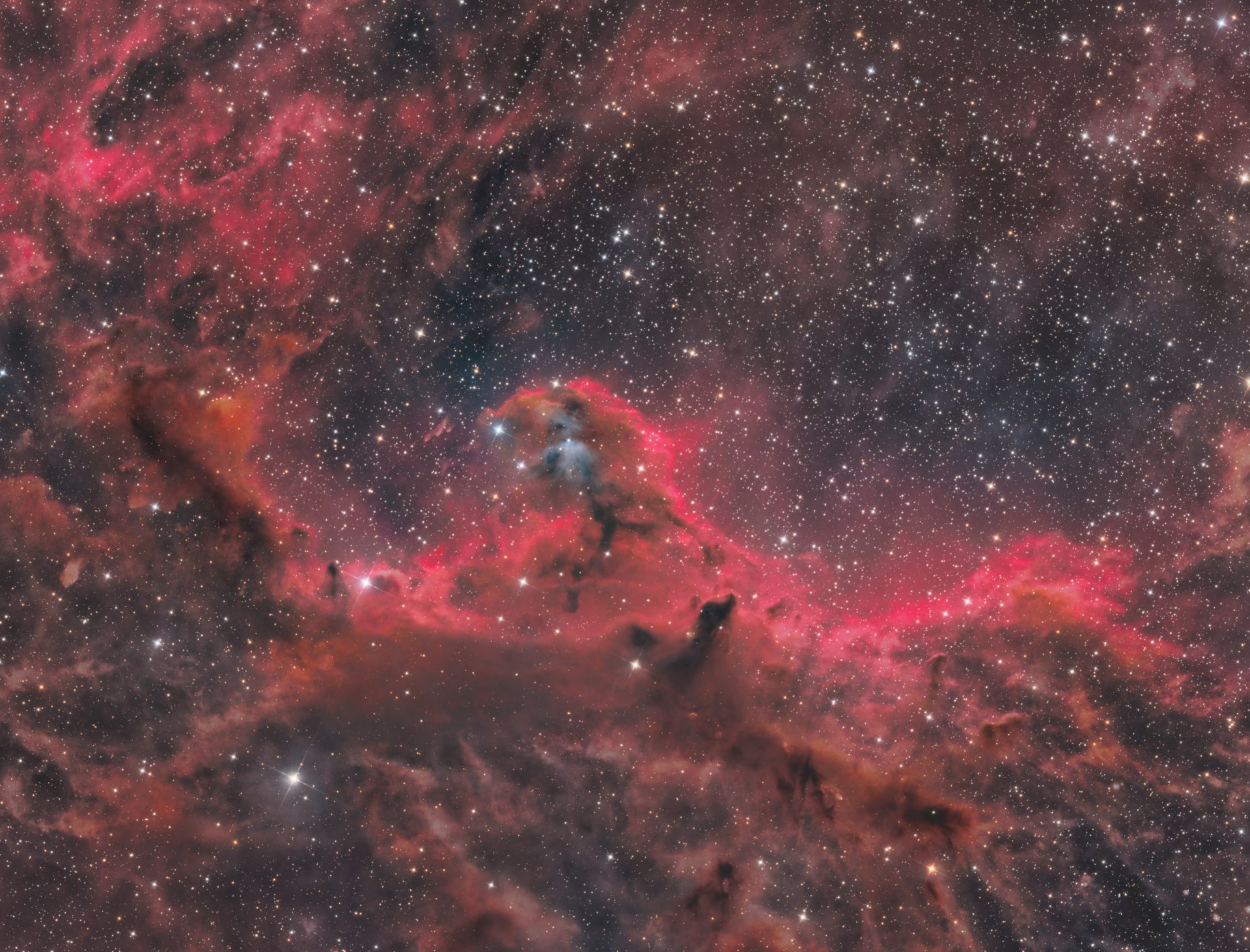
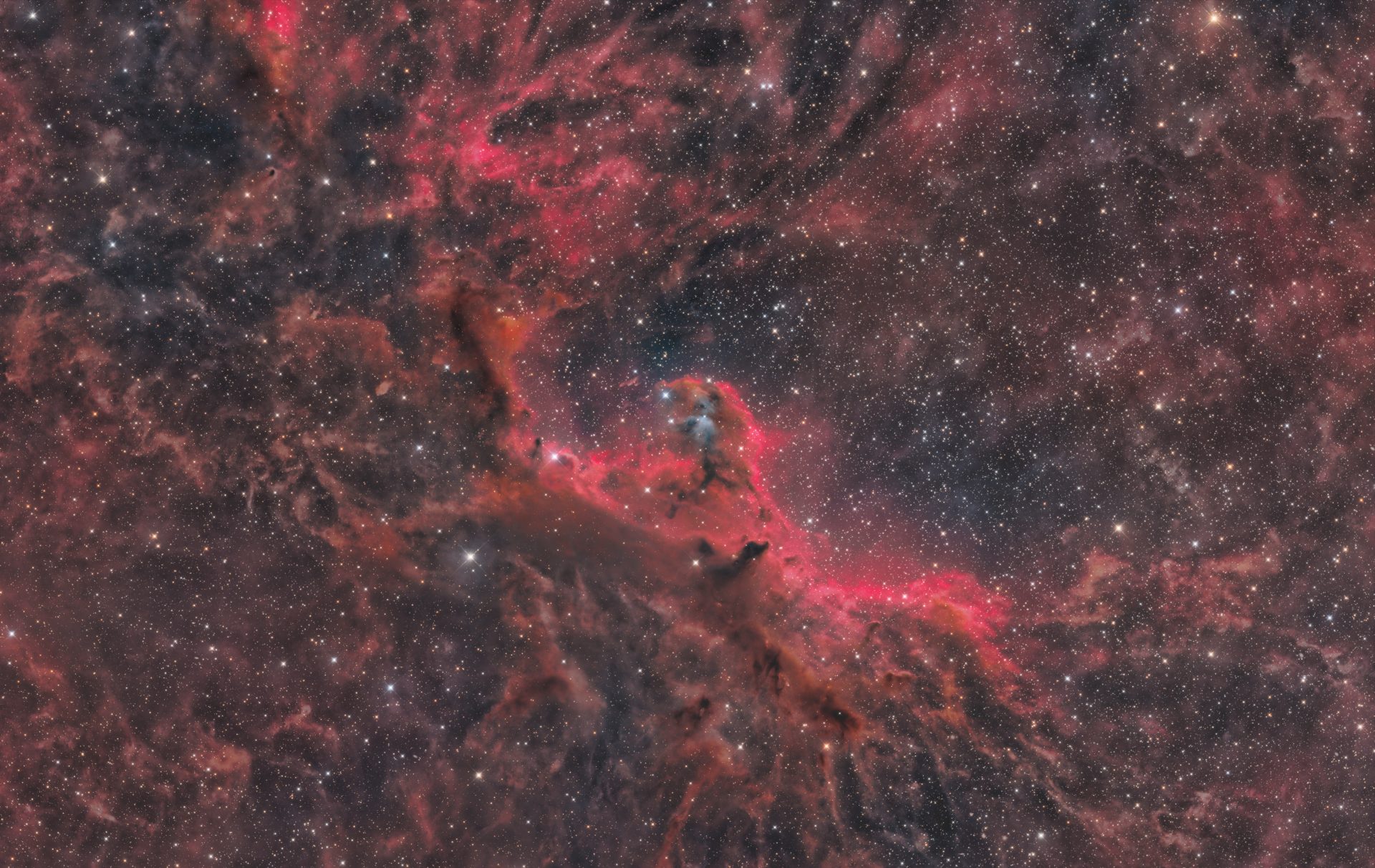
When we think of the constellation Orion, our minds invariably turn to the brilliant Great Nebula (M42) or the iconic Horsehead, a more subtle and complex drama unfolds in the hunter's head. Here, centred on the star Meissa, we find a perfect interplay of light and shadow: Cederblad 51 (Ced 51), a faint wisp of reflected light, and Lynds Dark Nebula 1583 (LDN 1583), an opaque silhouette of cold dust.
These are not two separate objects, but two faces of the same coin: a vast, energetic, and active stellar nursery.
Light and Shadow: Deep dive into Cederblad 51 and LDN 1583
This compelling contrast is not just a beautiful celestial accident. It is a direct, visual record of a profound cosmic cycle: the interplay between stellar feedback and new creation. The faint glow of Cederblad 51 is the energetic footprint of massive, young stars illuminating their surroundings. The dark veil of LDN 1583, by contrast, is the cold, dense cradle of molecular gas and dust where a new generation of stars is poised to form, hidden from our eyes.
What makes this region so scientifically compelling is that these two processes are physically and dynamically linked. We are witnessing a classic example of triggered star formation. The intense radiation and powerful stellar winds from the established, hot stars are actively compressing the nearby dark cloud. This pressure is the very mechanism that crushes the gas within LDN 1583, igniting the gravitational collapse that leads to new stars.
First Observation & Discovery
The region's confusing “alphabet soup” of designations (Ced 51, LDN 1583, B225) is a direct result of astronomers discovering its different components decades apart, each using different technologies and looking for different things. The first piece of the puzzle to be systematically identified was the shadow. Using long-exposure photographic plates in the early 20th century, E. E. Barnard (c. 1919-27) was the first to prove these dark patches were not “holes” in space but “obscuring bodies” of matter, listing this one as B225.
Decades later, in 1946, Sven Cederblad turned his attention to bright nebulae, identifying the faint, glowing wisp as Ced 51 and correctly classifying it as a reflection nebula. Finally, with the advent of superior photographic technology, Beverly Lynds used the high-resolution Palomar Observatory Sky Survey in 1962 to conduct a modern, systematic re-evaluation of dark clouds, giving the object its definitive designation, LDN 1583. This historical progression beautifully illustrates the region's dual nature: Barnard and Lynds catalogued the shadow, while Cederblad catalogued the light it cast.
Structure and Composition
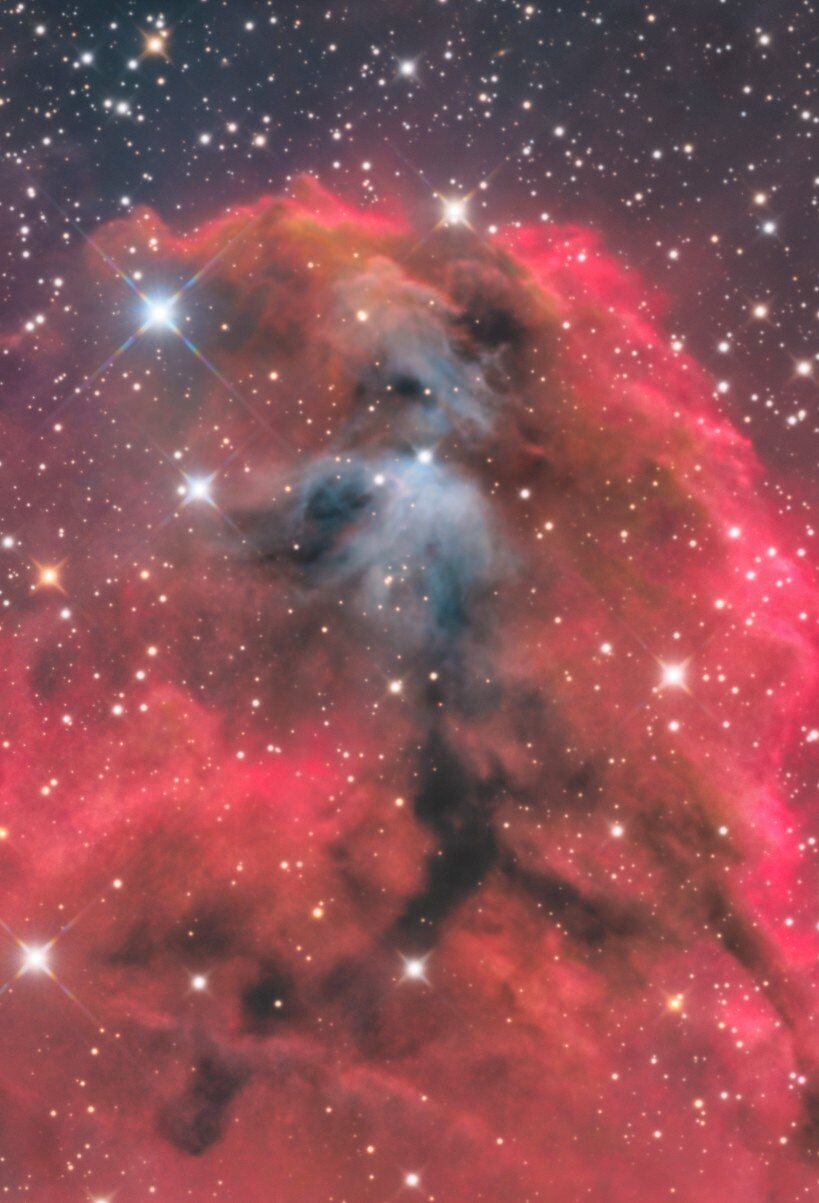 Cederblad 51 and LDN 1583 are both components of the enormous Lambda Orionis Ring (Sharpless 2-264). This is a massive, 130-light-year-wide bubble of ionised hydrogen gas, centred on the hot, blue giant star Meissa (Lambda Orionis).
About one to two million years ago, a massive star in this region's central cluster (Collinder 69) exploded as a supernova. This cataclysmic event, combined with the powerful stellar winds from Meissa, generated the spread of the surrounding gas and dust outwards into a single, expanding ring.
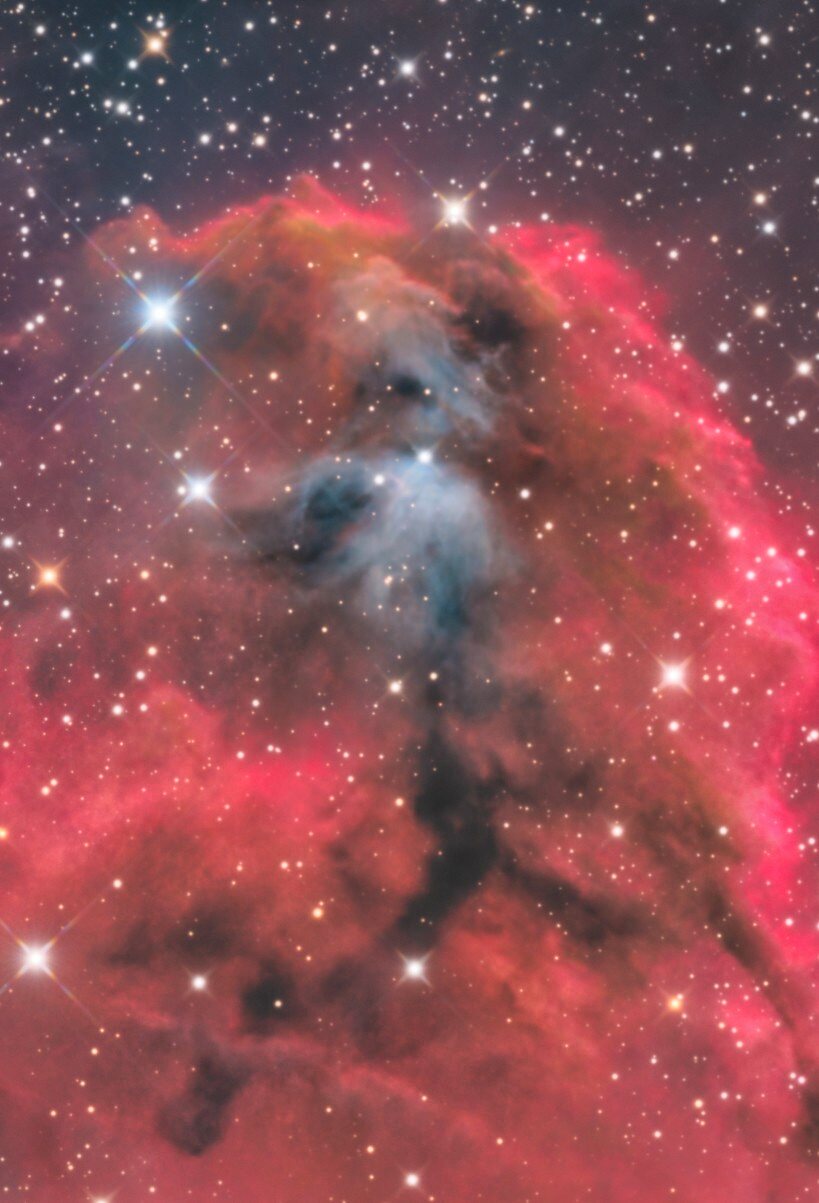
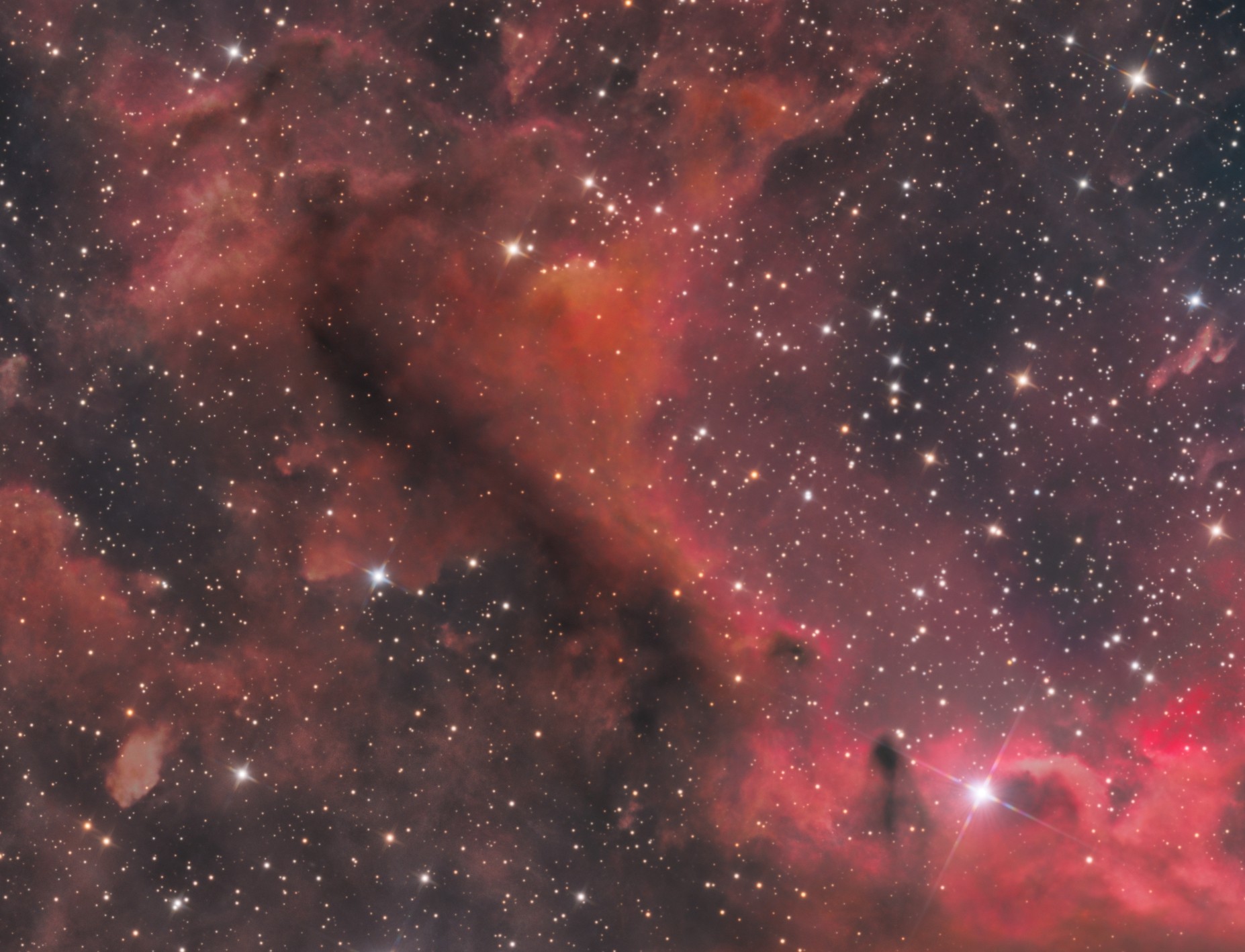
LDN 1583 is a dense, cold clump of the original molecular cloud. It is composed primarily of molecular hydrogen and cosmic dust grains (silicates and carbon). Its density is so high that it completely blocks visible light from the stars behind it, making it appear as an opaque silhouette. It is part of a larger dark cloud complex in the ring known as Barnard 303.
Cederblad 51 is a less-dense, filamentary wisp of the same cloud. It isn't dense enough to block light. Instead, its fine dust grains are perfectly positioned to scatter the blue light from Meissa and the other hot young stars in the Collinder 69 cluster. This is why it glows as a characteristic blue reflection nebula.
Stellar Population
The region is populated by two distinct groups of stars that tell a story of cause and effect:
- The Triggers (Collinder 69): The central star Meissa and its siblings in the Collinder 69 cluster are hot, young (a few million years old) O- and B-type stars. They are the engine of the region: they ionise the entire Sh2-264 ring, they illuminate the Cederblad 51 reflection nebula, and their combined winds and ancestral supernova are responsible for compressing the surrounding gas.
- The Newborns (YSOs): The immense pressure from the expanding supernova remnant has crushed the dark clouds on the ring's periphery, including LDN 1583. This compression has triggered a new wave of star formation. Hidden from visible light, deep inside the cold dust of LDN 1583, infrared telescopes have revealed a rich population of Young Stellar Objects (YSOs) and T Tauri stars—protostars in the very earliest stages of life.
The Lambda Orionis Ring is effectively one of the most important and clearest “laboratories” in the sky for studying triggered star formation. Here, astronomers can directly observe the cause and effect of such a process known as “stellar feedback”, a fundamental process in galactic evolution. The dual nature of Ced 51 and LDN 1583 allows astronomers to study the physics of a molecular cloud as it is simultaneously being eroded by radiation (seen in Ced 51) and compressed into new stars (seen in LDN 1583).
Future Evolution
The process we are witnessing is a snapshot in time. The future of this region is set: LDN 1583 will continue to collapse. The YSOs hidden within it will gather mass until their cores ignite nuclear fusion, and they will emerge as a new, young star cluster.
According to latest simulations, these new stars will then begin to produce their own powerful stellar winds and radiation before these new stars will destroy their own nursery. Their winds will blow away the remaining gas and dust of LDN 1583, dispersing the cloud and ending the star-forming episode in this specific location. The stellar lifecycle, from dust, to stars, and back to dispersed elements, will then be complete.
Observing LDN 1583 & Ced 51
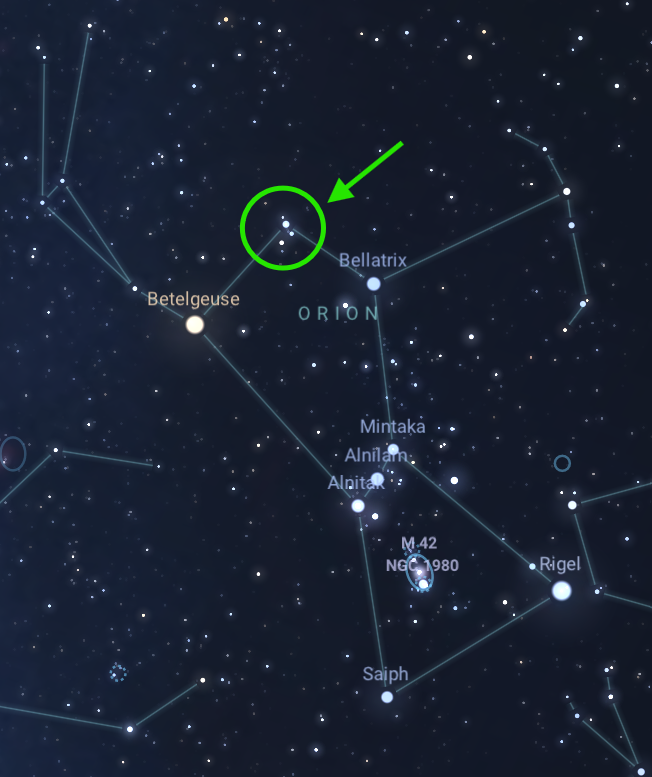 As a prominent feature of Orion, the region is best observed from the Northern Hemisphere during the winter months, from November to March. The entire complex is located in the “head” of Orion, thus the easiest way to find it is to locate the bright star Meissa (Lambda Orionis). The Lambda Orionis Ring, and with it Ced 51 and LDN 1583, are all centred on this star.
Visually, this is an objective for very dark, transparent skies (Bortle Class 3 or lower). Cederblad 51 may appear as an incredibly faint, diffuse glow with a wide-field telescope and averted vision. LDN 1583 is even harder, visible only as a patch “where the stars aren't”—a subtle void against the background Milky Way.
It's through astrophotography that the region truly comes to life. The entire Orion region is a classic astrophotographers' target but capturing both the faint reflection nebula and the dark nebula requires significant integration time and a combination of broadband and narrowband filters. This combination of light and shadow, easily erased by light pollution, is a powerful reminder of the subtle, complex beauty hidden in the natural night sky.
Photo Gallery